Born in New York on April 19, 1926, Klein was the son of Hungarian immigrants. His father owned a clothing store and was respected for the rigor of his Orthodox Jewish faith. Young Bill would not follow in his footsteps. In high school, he became the art director of the school newspaper, writing articles, laying out pages, and drawing witty cartoons and caricatures.
Klein was hungry and curious for culture. He devoured 20th-century literature, frequented the MoMA, and was enchanted by the films of Chaplin, von Stroheim, and Eisenstein. After finishing university, he enlisted at eighteen and landed in Europe. He eventually arrived in Paris where, as a soldier, thanks to a cultural exchange program, he attended the Sorbonne for a year and a half. In Paris, everything happened: he met his wife, Jeanne, with whom he would spend his entire life, and experienced his artistic turning point. After a stint in Fernand Léger’s studio, the young “American in Paris” experimented with hard-edge painting, creating large canvases filled with monochrome strokes, and worked in Milan with architects Mangiarotti, Zanuso, and Gio Ponti on a series of large structures—movable curtains for domestic settings. In an attempt to document his creations, he turned to photography. He realized that with this medium, he could capture what he had perhaps always been trying to grasp: movement.
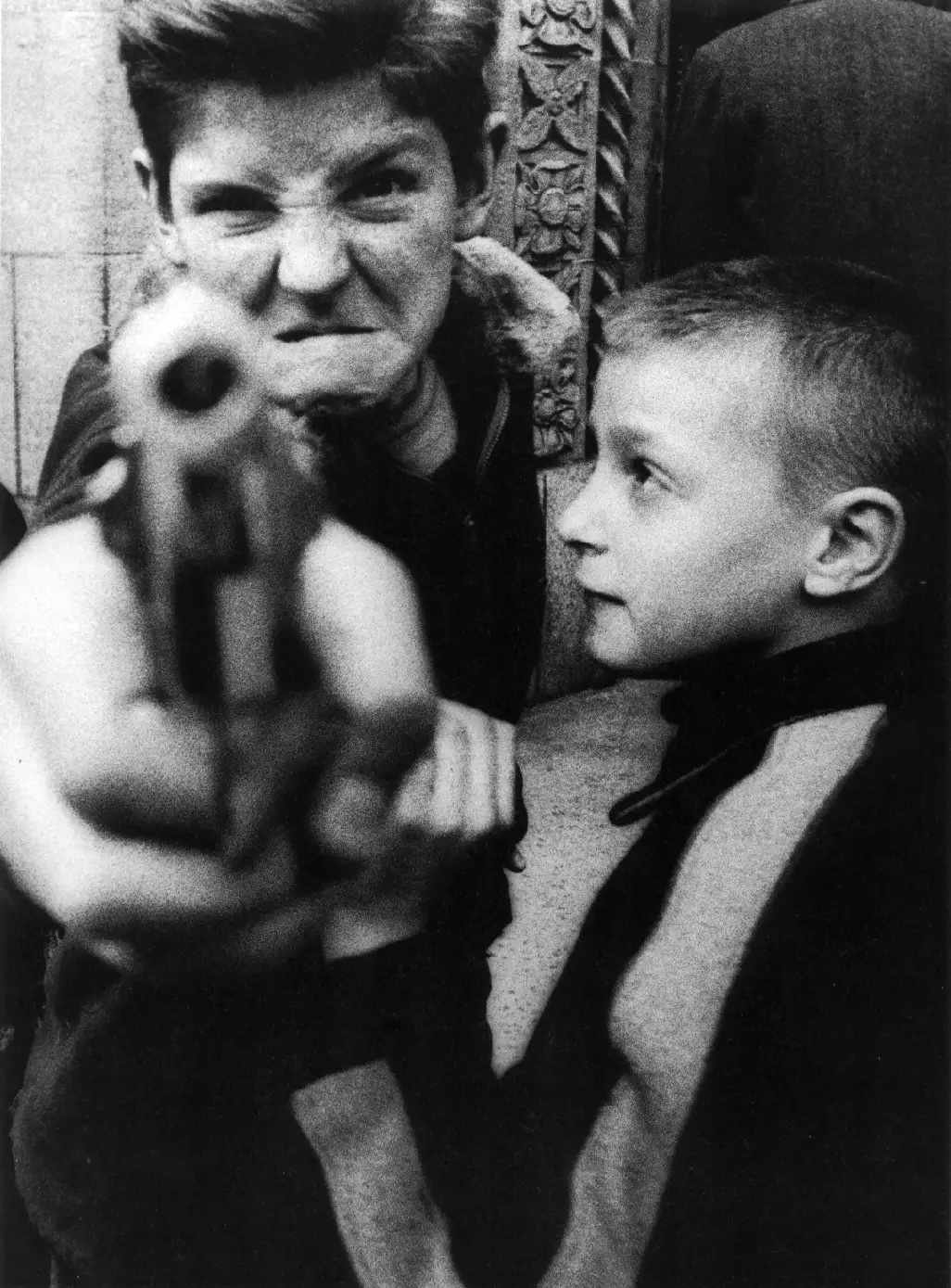
In 1954, he returned to New York to compile a photographic diary of his city. He had bought the Leica he held in his hands before leaving, purchased from Henri Cartier-Bresson at the Magnum agency offices in Paris. Upon arriving in New York, he realized that the lens used by the Frenchman—perhaps a 50mm—was not right: Klein wanted to get right up into people’s faces. He bought a different lens, a wide-angle, and tested it immediately outside the shop. The first images of New York were born this way, from a change of lens and perspective. The city is a stage without wings, and the photographer mingles and intrudes upon the paths of many lives, playing with them and then slipping away. The rhythm is compelling—a rapid accumulation of emotions that build upon and amplify one another.
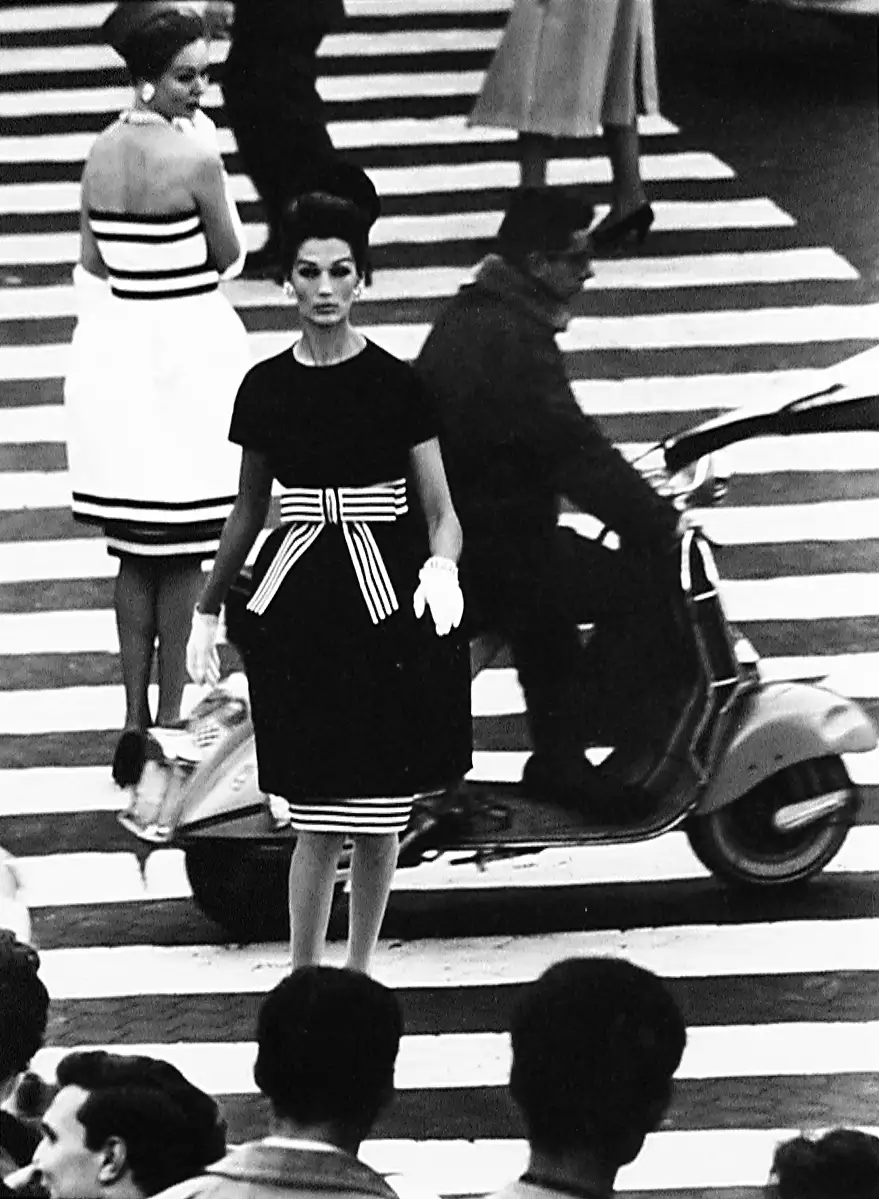
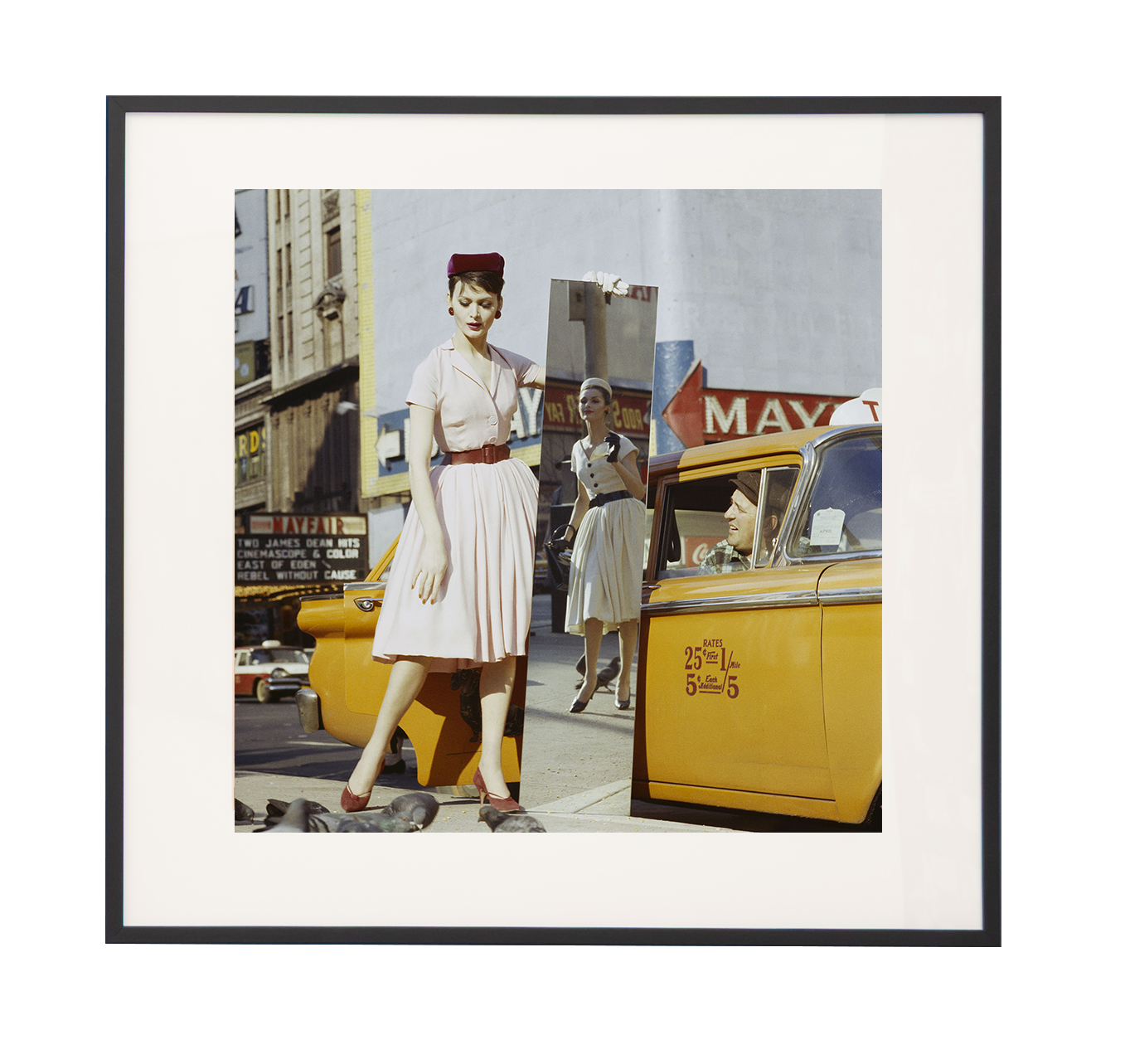
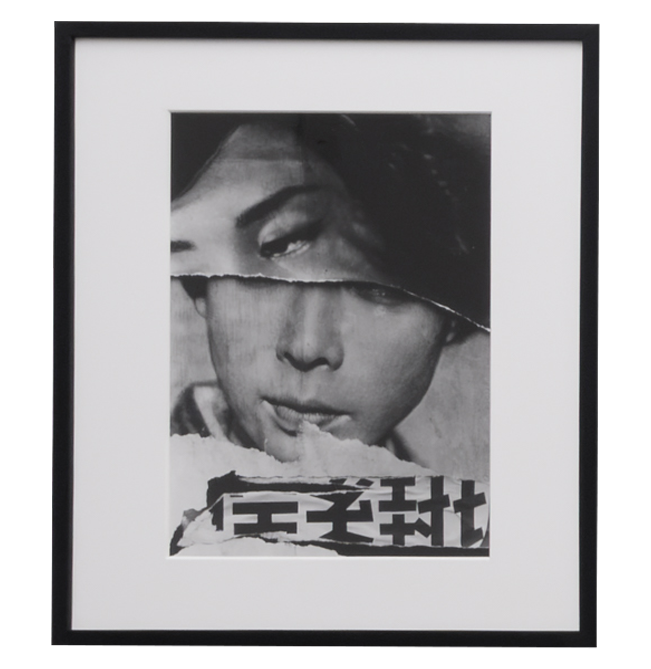
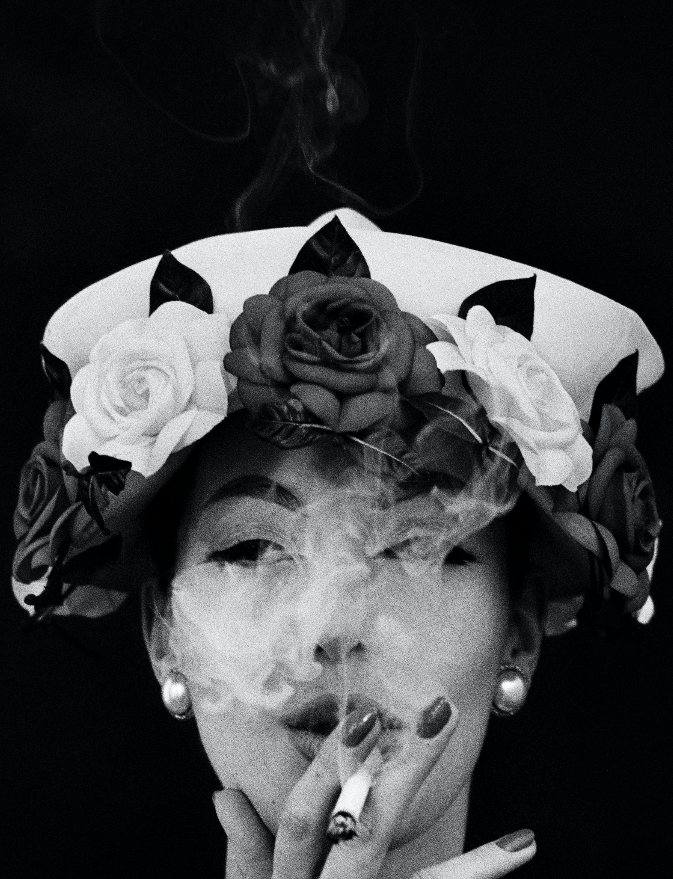
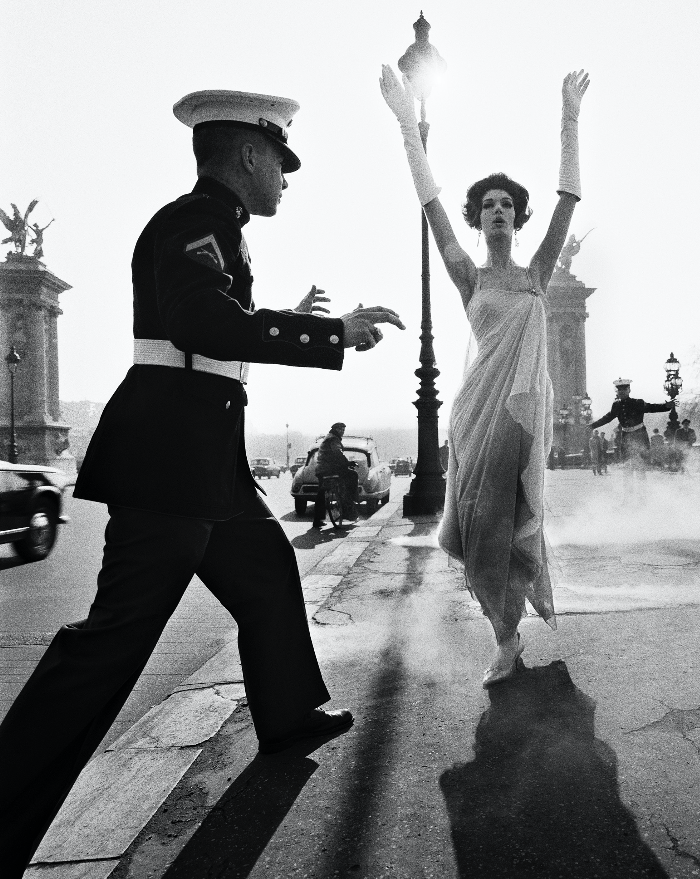
Other “city elegies” followed: Rome in 1956, under the complicit gaze of Fellini, then Moscow in 1959, and Tokyo in 1961-62. Meanwhile, he became drawn to fashion—a “baroque universe” and frenetic circus—and created new images, blending irony, movement, and curiosity. Cinema was bound to attract him: in 1958 he shot Broadway by Light, considered the first pop film, and for many years he focused almost exclusively on filmmaking. But in the eighties, he returned to photography and continued moving through city streets, just as in his beloved Paris.
And then? Then, until his death on September 10, 2022, Klein continued to browse, to provoke, to be fascinated by a passing smile, and to be moved (even if he would never admit it) by a gesture or a story—both an actor and a spectator of a life that never ceased to engage him with its swirling flow.
“What was photography to me? Coming from a geometric painting background where the outside world was excluded, it represented a window open to life. I could show how I saw it and what I thought of it. If you like, I was an artist who used photography, as they say, but not to make art—on the contrary, rather, to remake it. My watchword when making New York was ‘anything goes.’ And that still works for me, even today. No rules, no prohibitions, no limits.”